
HungryTech

For institutions across Uganda and East Africa

Build smarter. Improve safely. Stay in control.

Secure, AI-ready digital systems designed for institutions. We build new systems around the way your organisation actually works — and we improve the systems you already depend on, without putting them at risk.

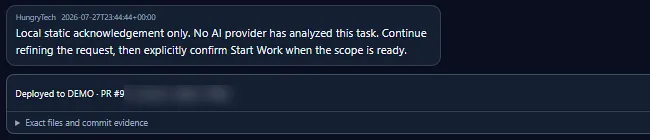
Command Center confirmation message requiring a person to approve the scope before work begins
Governed system improvementA person confirms the scope before work begins.HungryTech Command Center. Institution identifiers redacted.
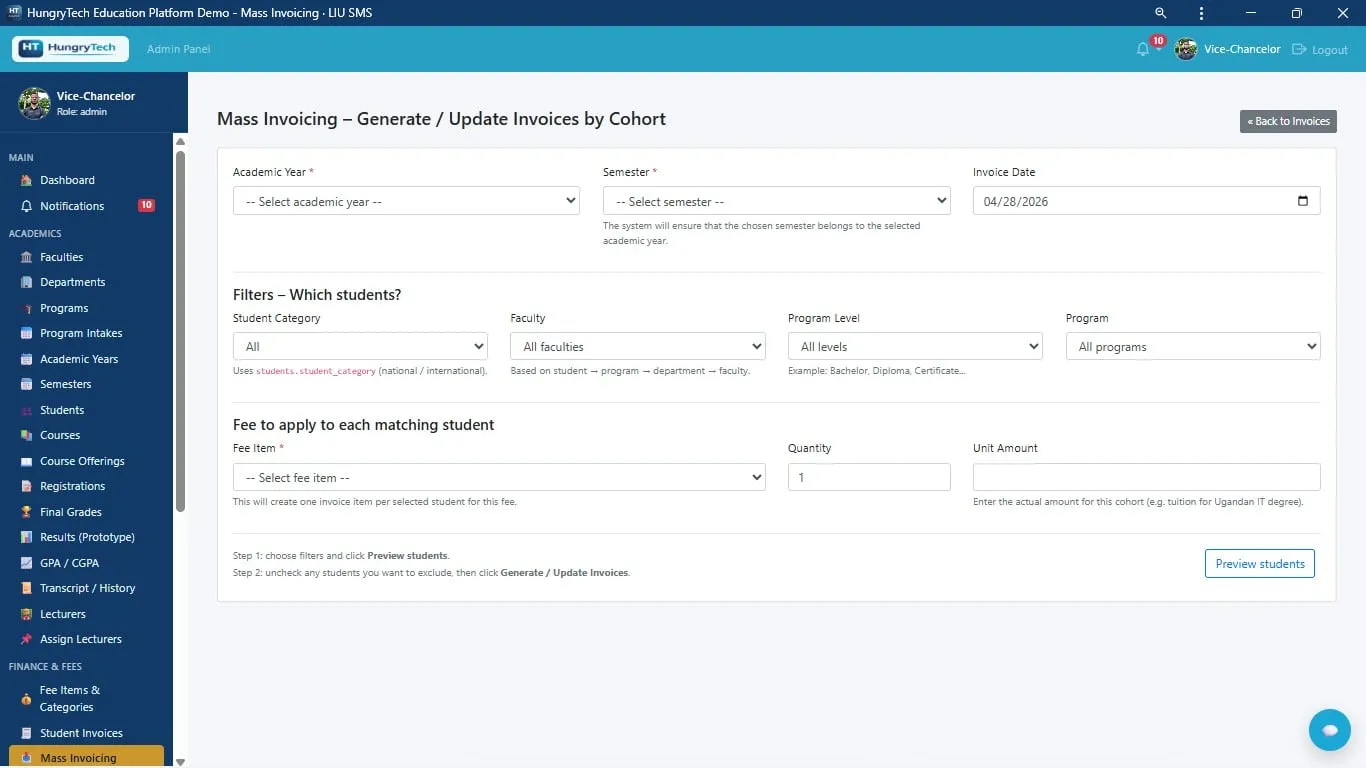
Education Platform mass invoicing screen for selecting an academic year, semester, student cohort and fee before previewing affected students
Institutional platformA governed workflow for institution-wide student invoicing.HungryTech Education Platform. Demonstration data.
  • Based in Mbale, Uganda
  • Serving institutions across Uganda and East Africa
  • New systems and existing-system improvement

What we do

Two pathways. One disciplined engineering approach.

Build a system from the ground up, or improve the system your institution already depends on. Both run through the same controls.

01

New institutional systems

We study users, workflows, approvals, records and reporting needs before designing anything. The system reflects how your institution actually operates, not how a generic product assumes it should.

  • University, school and college management
  • Admissions and registration
  • Finance and payments
  • Academic records and results
  • Portals, mobile apps and websites
02

Existing-system improvement

We understand the current platform first, preserve critical knowledge, then improve it through a controlled process that protects the investment already made.

  • New modules and integrations
  • Improved reporting and workflows
  • Security and access improvements
  • Performance and interface modernisation
  • Documentation and continuity

Your current system may need improvement — not replacement.

The question we ask before anyone proposes rebuilding anything.

Who we serve

Institutions, not just schools

Technology should fit the institution — not force the institution to fit the software. That applies wherever records, approvals and reporting have to be right.

  • Universities, schools and colleges

    Admissions, registration, academic records, finance and role-based portals for teaching institutions of every size.
  • NGOs and programme organisations

    Programme records, beneficiary tracking, approvals and reporting that stand up to funder scrutiny.
  • Healthcare and professional institutions

    Membership, registration, scheduling and records systems where access control and traceability matter.
  • Government-related organisations

    Workflow, approval and reporting systems built around real mandates, delegations and audit expectations.
  • Growing businesses

    Operational systems that replace spreadsheets and disconnected tools as an organisation outgrows them.
  • Institutions with existing software

    Systems already in daily service that need to be understood, documented, secured and improved rather than replaced.

Product proof

Real workflows, visible in the product

We do not publish client logos or testimonials we cannot evidence. Instead, here is software we have built, shown as it actually looks.

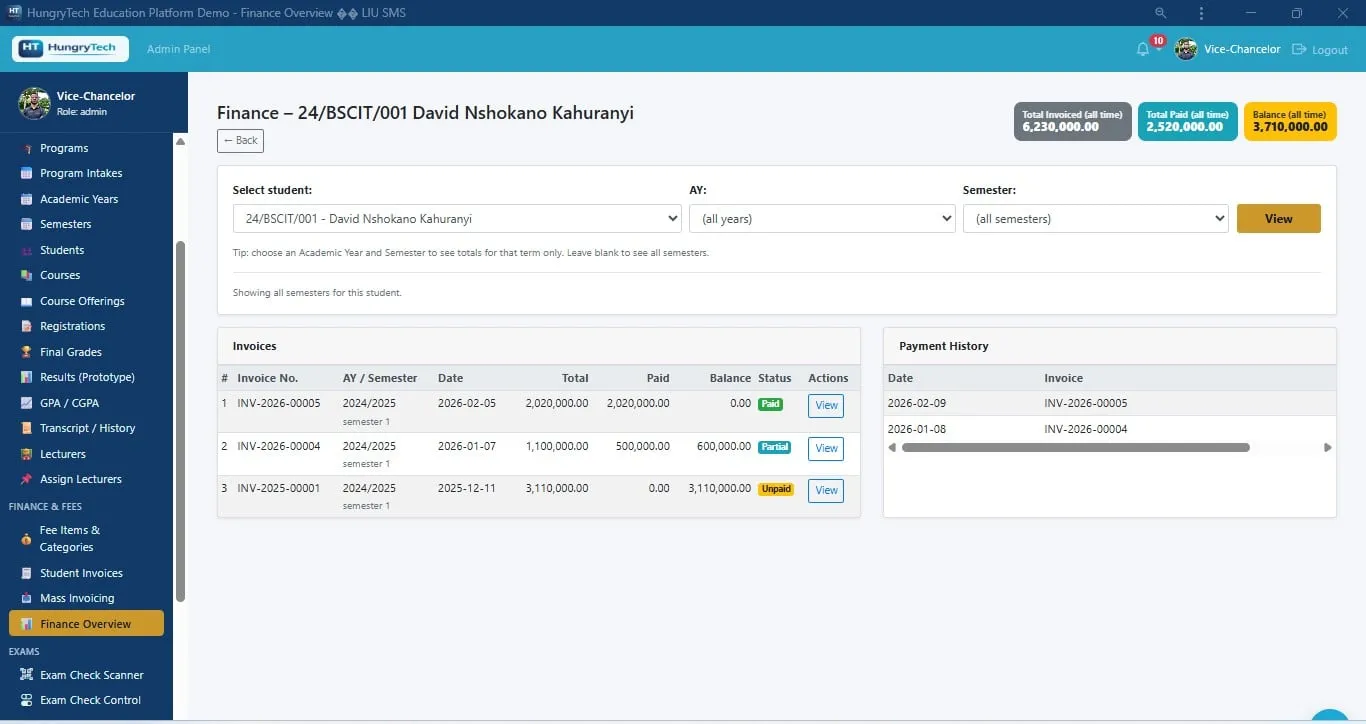
Education Platform finance screen listing student invoices, payments, balances and status for a demonstration institution
Student finance overview — invoices, payments and balances.HungryTech Education Platform, shown with demonstration data.

HungryTech Education Platform

A role-based platform that brings administration, finance, academic workflows and student access into one system. Administration and student records, finance and invoicing, attendance, lecturer portal, results and grades, student portal, and AI-assisted study support.

It remains an important proof product — but it is one of the things we build, not the whole of what we do.

HungryTech Command Center

A governed way to improve institutional software

Ordinary users describe the change they need in plain language. Technical coordination, evidence and repository operations stay behind the scenes. No GitHub knowledge is required of institutional users.

  1. 01Understand
  2. 02Clarify
  3. 03Assess
  4. 04Implement
  5. 05Review
  6. 06Test in DEMO
  7. 07Approve or improve
Command Center message stating that only a local static acknowledgement has been made, that no AI provider has analysed the task, and that Start Work must be explicitly confirmed — above a row recording a deployment to DEMO with linked file and commit evidence
Work does not begin until a person confirms the scope, and every DEMO deployment records the exact files and commits behind it.HungryTech Command Center. Institution identifiers redacted.
How Command Center works

Security and governance

AI assistance without surrendering institutional control

The workflow adds evidence, review and approval as the risk of the task increases. Routine work stays quick; consequential work does not.

  • Controlled access

    Users receive permissions appropriate to their role.

  • Approved requirements

    Important work begins from a clear, agreed brief.

  • Risk-based review

    Higher-risk tasks receive stronger scrutiny.

  • Independent verification

    The implementer does not simply approve their own work.

  • Human authority

    People approve consequential requirements and releases.

  • Recovery and traceability

    Supported deployments retain evidence, backup and recovery records.

Reliability per shilling

The right intelligence for the task — not the highest cost every time

Command Center selects the least expensive capability able to satisfy the required reliability gate, and escalates only when the evidence demands it.

How task risk determines the intelligence and assurance applied
TierTypical workIntelligenceAssurance
EfficientText, layout and isolated routine workFocused implementationLight review
CapableBusiness logic and contained workflow changesNormal reasoningStandard review and testing
FrontierFinance, permissions, security and database riskAdvanced reasoningSpecialist review and human approval

Scroll the table sideways to see every column.

Frontier intelligence where the risk demands it. Measured value everywhere else.

How an engagement begins

Understanding first. Recommendation second.

We do not quote a rebuild before we know what you already have.

  1. Discovery

    We start by understanding priorities, users and the systems already in place — before proposing anything.

  2. Recommendation

    Build, improve, integrate or stabilise. Whichever is genuinely right for the institution, stated plainly.

  3. Controlled delivery

    Requirements, engineering, review and support, with decisions and evidence recorded as we go.

Next step

Let us understand the system your institution needs.

Whether you need a new system or a safer way to improve the one you already use, we begin with understanding and deliver through a controlled, documented process.

The button opens WhatsApp with a short message already written. Edit it before you send.